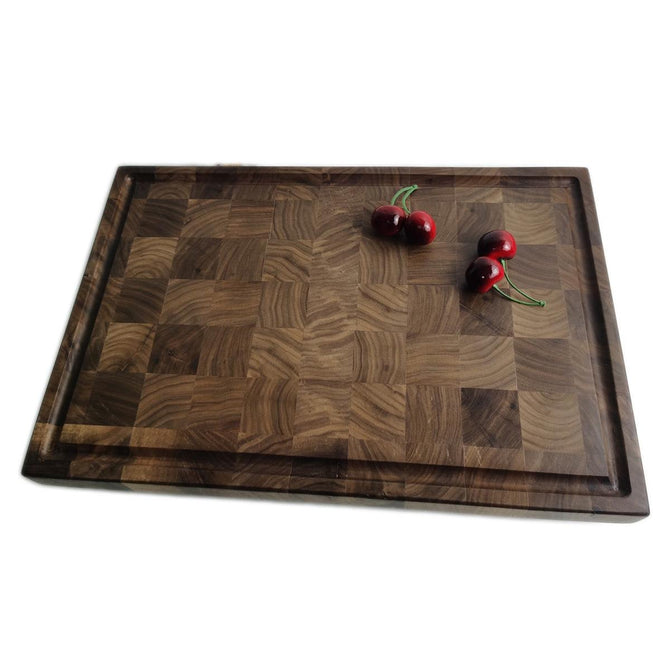
End grain wood cutting boards are an essential kitchen tool known for their durability and aesthetic appeal. These boards are crafted by arranging wood pieces so that the grain runs vertically, creating a visually striking and functional surface. Unlike the traditional face grain or edge grain cutting boards, end grain boards are designed to be gentler on knives and more resistant to marks and scratches. This unique construction not only enhances their functional attributes but also makes them a preferred choice for culinary enthusiasts and professionals alike.
Advantages of End Grain Wood Cutting Boards
Durability and Longevity
End grain cutting boards are superior in durability, thanks to their construction design. The fibers of the wood stand upright, which allows the board to withstand heavy chopping and slicing. This makes them an excellent choice for a butcher block cutting board, where frequent and intense use is expected.
Knife-friendliness
One of the standout benefits of end grain boards is their gentle nature towards knives. When a knife cuts into the surface, the wood fibers separate and then close up again, preserving the sharpness of the blade. This quality reduces the frequency of sharpening, thus prolonging the knife?s lifespan.
Self-Healing Surface
The vertical grain structure of these boards provides a self-healing effect. When cut, the fibers close back together, minimizing the appearance of knife marks. This feature contributes to the board’s overall aesthetic and longevity, making it an attractive option for a wood grain cutting board.
Aesthetic Appeal
End grain wood cutting boards are not just functional but also visually appealing. The mosaic-like pattern created by the wood blocks adds elegance and sophistication to any kitchen. This makes them a popular choice for those who appreciate both style and functionality in their kitchen tools.
Comparing Various Wood Cutting Boards
End Grain vs. Edge Grain
While end grain cutting boards excel in durability and knife preservation, edge grain cutting boards offer a simpler, more uniform appearance. Edge grain boards are constructed with the wood fibers running parallel, which can be slightly more affordable but may show knife marks more readily over time.
End Grain vs. Face Grain
Comparatively, a face grain cutting board is crafted with the widest side of the wood plank, showcasing a broad, uninterrupted grain pattern. While face grain boards are often admired for their aesthetic charm, they may not offer the same level of durability or knife-friendliness as end grain options.
Choosing the Right Wood Type
The type of wood used in the construction of an end grain board can significantly impact its performance and appearance. Commonly used woods include:
- Maple: Known for its hardness and fine grain, making it a popular choice for wooden chopping boards.
- Walnut: Offers a rich, dark color and is often used for a walnut end grain cutting board, providing both beauty and functionality.
- Cherry: Provides a warm hue and smooth surface, although slightly softer than maple and walnut.
Conclusion
End grain wood cutting boards stand out as a premier choice for those seeking a blend of functionality, durability, and aesthetic appeal in their kitchen tools. Whether used as a primary end grain wood cutting board or as a complement to other styles such as edge or face grain, these boards offer unmatched benefits that cater to both professional chefs and home cooking enthusiasts.
About the Author


